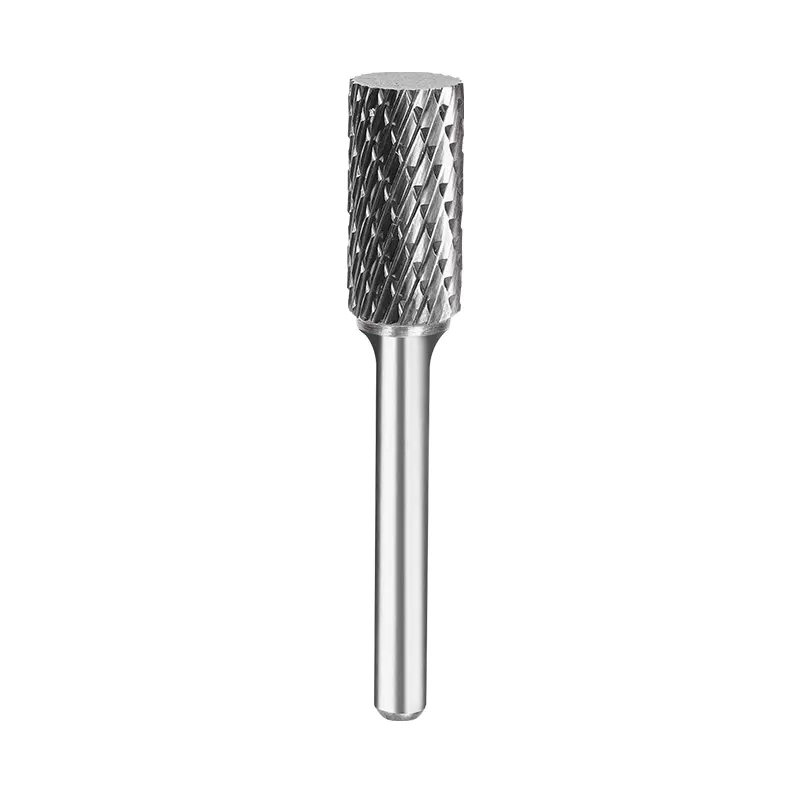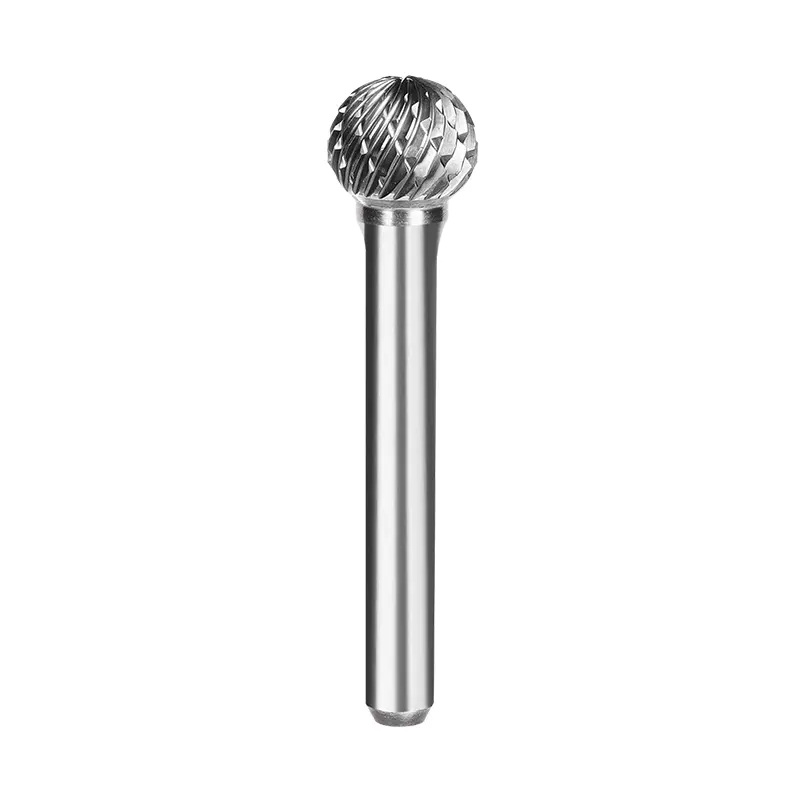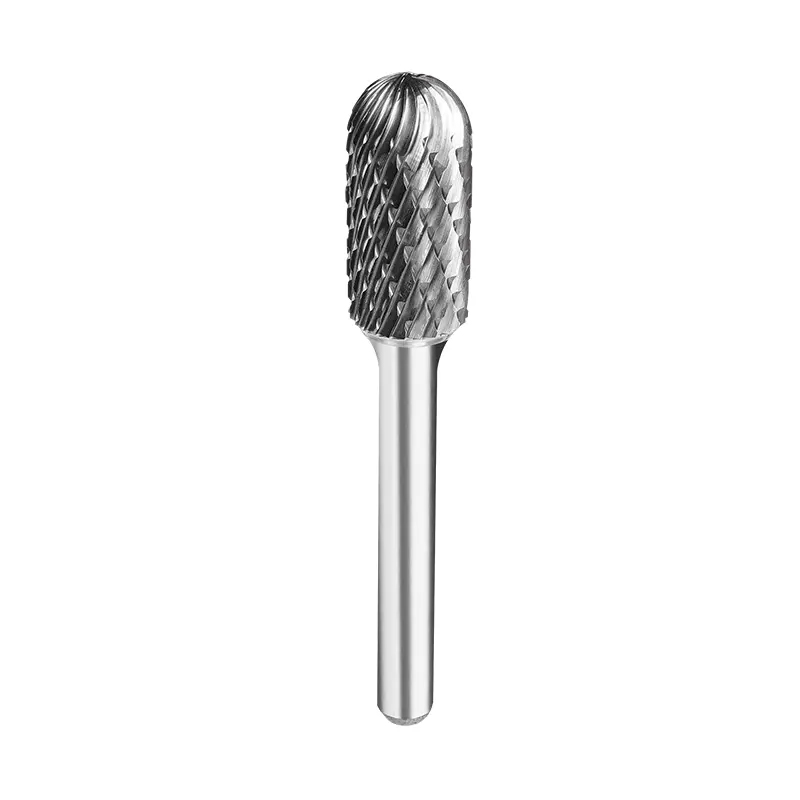

In-depth knowledge of how the tool, material, and tool drive interact forms the foundation for achieving, economical machining results.
Which burr should I use? What is a suitable cut?
The type of burr that you should use very much depends on the situation. You should select a burr based on the application and the material that you will be working on.
What types of drives can the burr be used with?
To prevent vibrations, preferably attach the burrs to powerful drives with an elastically supported spindle. Flexible shaft drives, straight grinders, robots, and tool machines are all suitable tool drives.
Make sure that you only use rigid clamping systems and drives, as the impact on the tool and tool chatter can to premature wear.
How deep should the burr be clamped in?
Once you have chosen the suitable burr and drive, the next step is to ensure that the burr is clamped securely. To do so, make sure that you clamp the burr far enough into the drive.
As a general rule: the clamping depth must be 2/3 of the shank length.
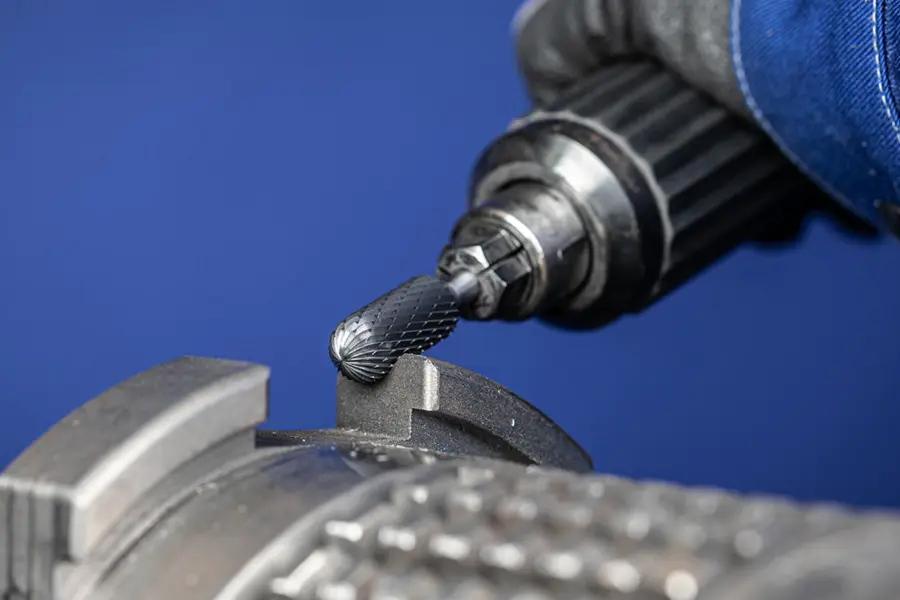

You should also ensure to take the following safety precautions before using the burr:
· Wear eye protection
· Wear hearing protection
· Wearing protective gloves is recommended
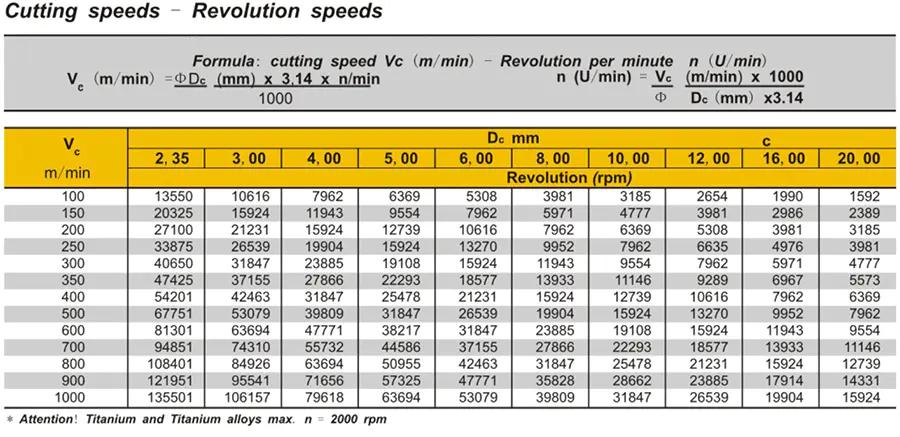
· Observe the recommended rotational speeds
At what rotational speed should you use the burr?
It is crucial to set the right rotational speed for milling. It is not possible to ensure the cost-effective use of tungsten carbide burrs nor achieve working results unless you select the optimum rotational speed and power output of the tool drive (air-powered or electric grinders, flexible shaft drive).
So make sure you always use the recommended rotational speed range when working with burrs. This should be chosen based on the following factors:
· The material you will be working on
· Cut
· Application (fine stock removal or rough stock removal)
· Burr diameter
Another point to remember is that, for cost effective use of burrs with a shank diameter > 6 mm, you need to use a drive output of 300–500 watts when you work with a higher rotational speed and cutting speed range. For applications with low stock removal (deburring, chamfering, minor work on surfaces), the rotational speed can be increased by up.
What is the right way to use the burr?
Guide the tool drive with both hands and make sure that the area of the burr that is in contact with the workpiece is no more than 1/3 of the entire circumference. Failure to comply with this recommendation will result in rough milling behavior and possibly in broken teeth.
In general, burrs are used counter -rotationally or with a swinging motion. You can also use the burr in the direction of rotation if you wish to achieve a fine finish. To do so, pass the tool rapidly over the workpiece.
联系地址:Qingjiang Industrial Park, Yueqing City, Zhejiang Province, China.
联系电话:0086-577-62256666
传真号码:0086-577-62258808
联系邮箱:wy@wanyatools.com
Copyright © 2025 Yueqing Wanya Tools Co., Ltd. All Rights Reserved.
 中文版
中文版 English